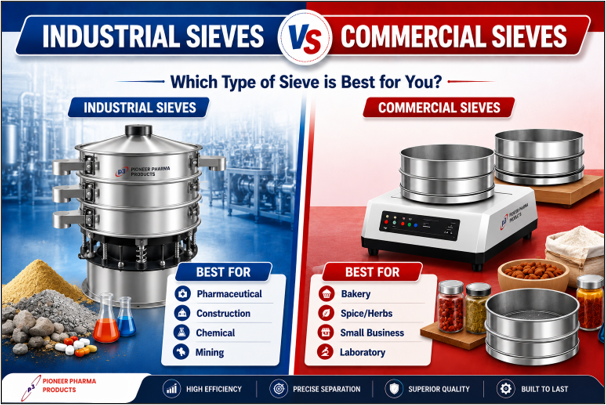
Compared to standard sieves‚ Stainless Steel Sieves are more durable‚ corrosion-resistant‚ and hygienic‚ and are best used in industry․ Whereas standard sieves can still be used effectively for general sieving‚ Stainless Steel Sieves are stronger and will last longer․ They are commonly found in industrial applications such as chemicals‚ fertilizers‚ cement‚ plastics‚ and rubber․
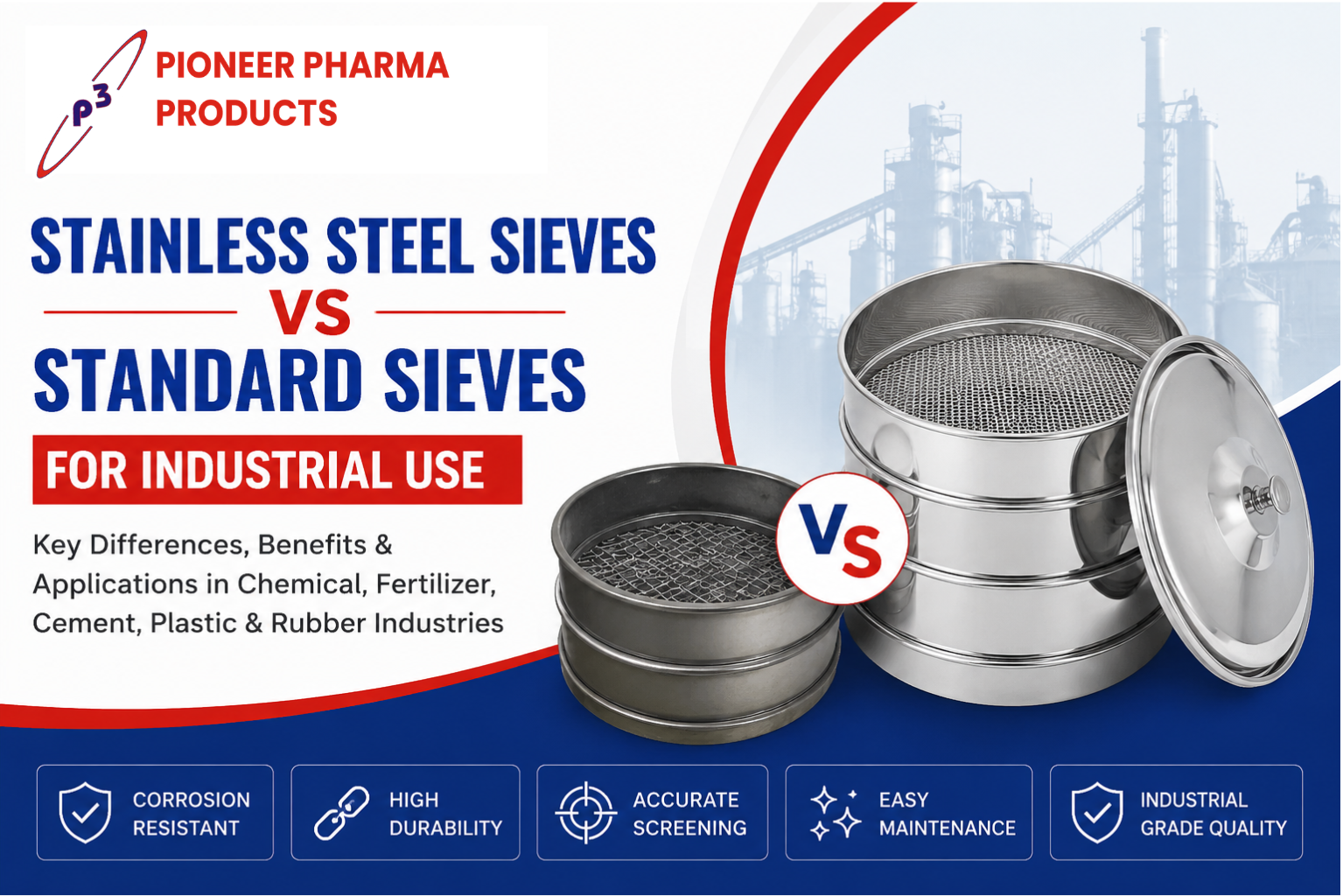
Industrial sieves are used to separate‚ filter‚ and control the particle size of solids‚ liquids and powders in a variety of manufacturing processes․ The differences between Stainless Steel Sieves and other materials are in quality‚ durability‚ corrosion resistance‚ cleaning‚ and the ability to withstand harsh industrial conditions․
A Stainless Steel Sieve (SS Sieve) is a sieve with a screen mesh and frames made from stainless steel, offering high strength‚ corrosion resistance and precision sieving for chemical applications․
By Standard Sieve is generally meant sieves made from conventional materials such as mild steel‚ carbon steel‚ nylon or plastic‚ or some basic material used for wire mesh‚ generally for normal screening applications‚ where the sieves are not exposed to corrosive chemicals‚ moisture or high temperature extremes․
| Feature | Stainless Steel Sieves (SS Sieves) | Standard Sieves |
|---|---|---|
| Material | Stainless steel such as SS304 / SS316 | Mild steel, plastic, nylon, or basic metals |
| Corrosion Resistance | Excellent resistance against rust and chemicals | Limited resistance depending on material |
| Durability | High mechanical strength and longer working life | Lower durability in harsh environments |
| Maintenance | Easy cleaning and low maintenance | Requires frequent replacement or maintenance |
| Industrial Suitability | Chemical, fertilizer, cement, plastic, rubber processing | General screening applications |
| Hygiene Level | Suitable where contamination control is required | Limited hygiene performance |
| Cost Efficiency | Higher initial cost but better long-term value | Lower upfront cost |
Key Fact: Stainless Steel Sieves are preferred for industrial processing because they maintain accurate screening performance, resist corrosion, and withstand demanding production environments.
In powder‚ granule/powder‚ chemical, and abrasive industrial applications, there is usually a need for continuous operation with minimal downtime․The high-quality sieves are made from stainless steel and offer:
1. Better Corrosion Resistance
Chemical and fertilizer processing involves media that may react with normal metals‚ while stainless steels resist the harmful actions of moisture‚ chemical attack‚ and industrial atmospheres․Corrosion resistance directly affects service life and product quality in industries using acids‚ salts‚ fertilizers and chemical powders․
2. Increased Durability and Service Life
As industrial screening is subject to vibration‚ pressure, and continuous operation‚ the structural quality of Stainless Steel Sieves is important․
A stronger sieve reduces:
3. More Accurate Particle Size
The correct classification of these particles is important in‚ among others‚ cement‚ plastics, and rubber․
SS Sieves provide:
A good sieve gives the industrial product the desired stability.
Chemical and fertilizer production requires reliable screening solutions for the abrasive‚ moisture-sensitive‚ or chemically active materials present in raw materials․
Applications of Stainless Steel Sieves in Chemical Industries
SS Sieves are commonly used for:
Applications in Fertilizer Manufacturing
The production of fertilizer products also relies upon a specific particle size distribution for handling‚ mixing‚ and application․
Stainless Steel Sieves help manufacturers achieve:
The cement industry works with abrasive materials‚ meaning low-quality screening equipment wears out easily․
Common materials screened include:
Benefits of using SS Sieves in cement plants
| Requirement | Benefit of SS Sieves |
|---|---|
| Abrasion resistance | Longer operational life |
| Accurate separation | Better cement quality control |
| Heavy-duty operation | Suitable for continuous processing |
| Easy maintenance | Reduced downtime |
In plastic and rubber processing‚ particle size control is important for compounding‚ sorting, and preparation of materials․
Plastic Industry Applications
SS Sieves are used for:
Rubber Industry Applications
Rubber manufacturers use industrial sieves for:
High-performance sieves achieve their best operation with uniform flow of material and particle distribution.
Industrial applications depend on the material, the particle size, and processing.
Common types include:
1. Stainless Steel Wire Mesh Sieves
These sieves use woven stainless steel mesh to separate particles.
Suitable for:
2. SS316 Sieves
SS316 Sieves offer increased corrosion resistance compared to standard grades of stainless steel. They are used in industries where the materials being processed are highly reactive. Pioneer Pharma Products supplies SS316 lead-free sieves in several mesh sizes and polished states for industrial applications.
3. Vibro Sifter Sieves
Vibro sifter sieves are used for high-speed screening operations.
Applications include:
The choice of an industrial sieve depends on multiple factors.
Important Selection Parameters
Material Compatibility
Check if the sieve material can withstand the processed material. For example:
Mesh Size Requirement
The mesh size determines the size of the particles that pass․Smaller mesh openings allow for finer separation․
Operating Environment
Consider:
Equipment Compatibility
The sieve must match the processing equipment:
A Pioneer Pharma Products is a manufacturer and supplier of industrial sieves and screens based in Mumbai‚ India․ The firm manufactures lead-free SS316 sieves‚ sifter sieves‚ and customized sieves for all industrial applications․
Key Manufacturing Strengths
A Pioneer Pharma Products serves the chemical‚ pharmaceutical‚ fertilizer and industrial processing industries with their need for reliable screening․
Industrial buyers are increasingly focused on:
1. Longer Equipment Life
Manufacturers prefer sieves of greater durability‚ lowering replacement costs․
2. Corrosion-Resistant Materials
The chemical and fertilizer industries are using stainless steels in more aggressive conditions.
3. Customized Industrial Solutions
Industries now require sieves designed according to:
4. Better Quality Control
Precision screening has become a critical aspect of quality control.
Industries such as chemicals‚ fertilizers‚ cements‚ plastics‚ and rubber processing require maximum production quality and efficiency‚ and this is achieved using an appropriate sieve․ Stainless Steel Sieves have greater strength‚ corrosion resistance‚ accuracy of measurement‚ and durability than other sieves․
Hence‚ manufacturers must be aware of the advantages of using high-quality sieves for processing needs and industrial processing and extraction processes from a supplier with experience such as Pioneer Pharma Products․
Yes․ Stainless Steel Sieves are of higher quality‚ more durable‚ easier to maintain‚ and more corrosion-resistant than standard sieves‚ especially in an industrial setting․
Stainless Steel Sieves are employed in the chemical‚ fertilizer‚ cement‚ plastic‚ rubber‚ pharmaceutical‚ food‚ and powder processing industries․
Sieves are also made out of SS316‚ which has better resistance to corrosion in severe chemical environments․
Yes․ Commercial sieve makers can adjust the sizes‚ dimensions‚ shapes‚ and finish to follow those in the drawing․
Service life is determined by the operating and cleaning conditions‚ the abrasiveness of the materials‚ and the frequency of use‚ although SS Sieves have a longer service life․
Industries use High Quality Sieves to increase production efficiency‚ reduce downtime‚ maintain product quality and improve process control․