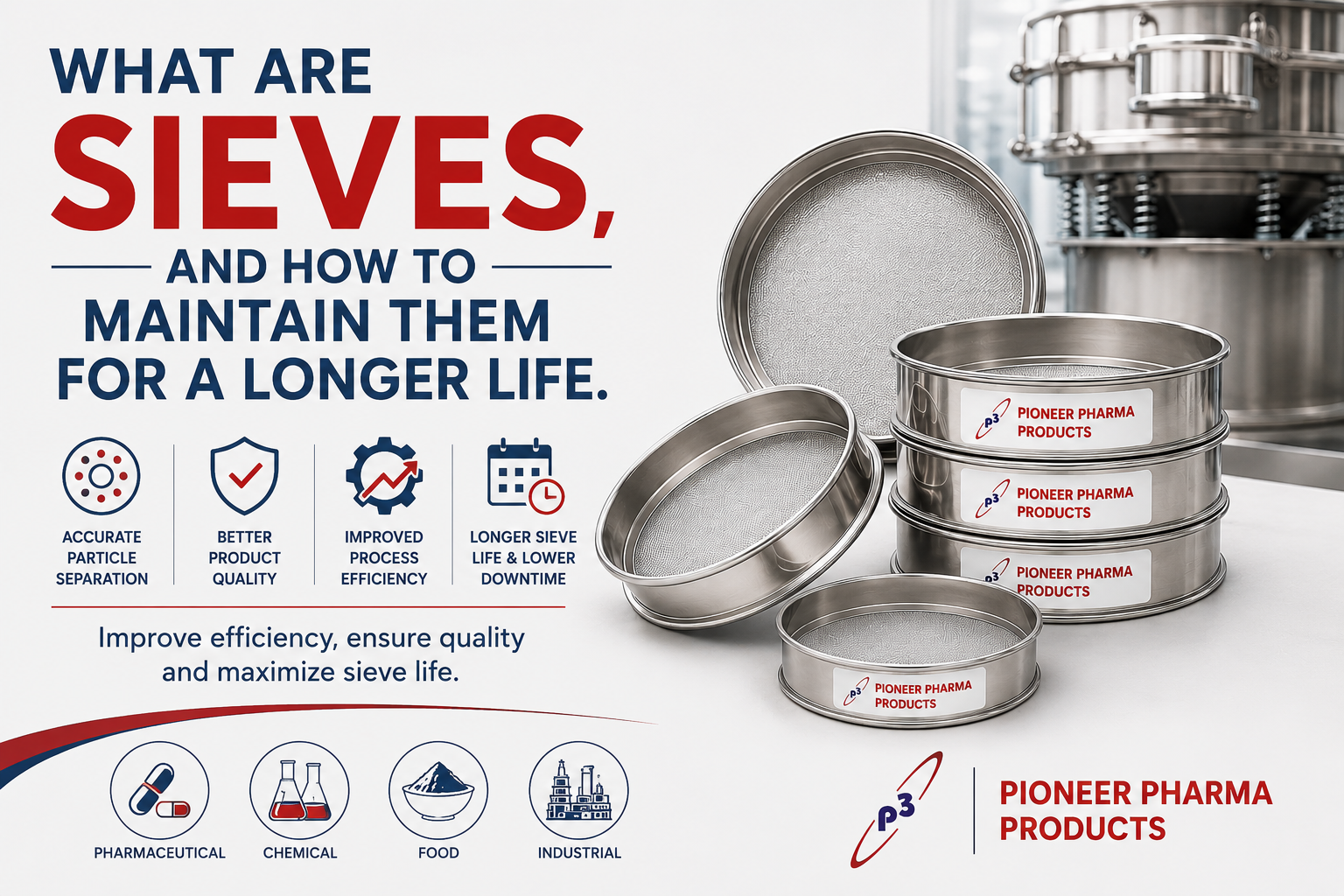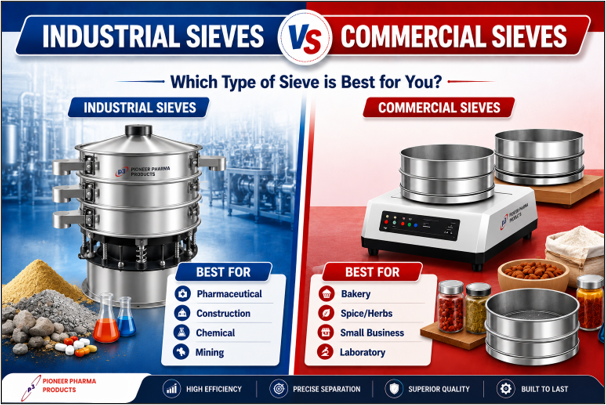
Sieving technologies play a critical role in manufacturing and processing‚ including applications in classification by size‚ quality control, and material grading‚ in industries such as chemical‚ construction‚ food processing‚ minerals and mining‚ and pharmaceuticals․
Although the working principle of all sieves is the same separating particles based on size the engineering, capacity, durability, and application scope vary significantly between Industrial Sieves and Commercial Sieves.
Understanding this difference is essential for selecting the appropriate equipment and optimizing production efficiency and quality standards․
In industrial engineering‚ a sieve is a mechanical or semi-mechanical device used to separate particles using defined mesh sizes․
The process ensures:
In pharmaceuticals‚ food manufacturing‚ and other regulated industries‚ sieving is more than a simple separation method, it is a requisite quality assurance step․
Commercial sieves are used in low to medium-scale production lines‚ workshops‚ laboratories‚ and in artisanal production units․
They have been designed to be low-cost‚ low-maintenance, and easy to operate‚ rather than being industrial workhorses․
Key Technical Characteristics:
Typical Applications:
Commercial sieves are mainly useful where production volumes are low, and less process complexity․
Industrial sieves are durable screening systems used in constant and high-capacity production plants․
They are widely used in regulated‚ high-throughput industries that demand accuracy and reliability over long runs․
These systems are commonly manufactured by established engineering companies such as Pioneer Pharma Products, which specializes in pharmaceutical-grade sieving equipment including vibro sifters‚ multimill sieves‚ cadmill sieves‚ and fluid bed dryer sieves across various industries worldwide․
Key Technical Characteristics:
Typical Applications:
Industrial sieves are made to be reliable under constant use․
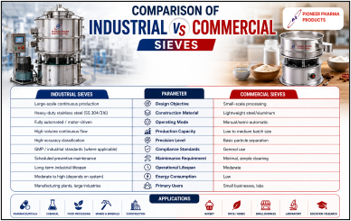
| Parameter | Commercial Sieves | Industrial Sieves |
|---|---|---|
| Design Objective | Small-scale processing | Large-scale continuous production |
| Construction Material | Lightweight steel/aluminum | Heavy-duty stainless steel (SS 304/316) |
| Operating Mode | Manual/semi-automatic | Fully automated / motor-driven |
| Production Capacity | Low to medium batch size | High-volume continuous flow |
| Precision Level | Basic particle separation | High-accuracy classification |
| Compliance Standards | General use | GMP / industrial standards (where applicable) |
| Maintenance Requirement | Minimal, simple cleaning | Scheduled preventive maintenance |
| Operational Lifespan | Moderate | Long-term industrial lifespan |
| Energy Consumption | Low | Moderate to high (depends on system) |
| Primary Users | Small businesses, labs | Manufacturing plants, large industries |
1. Structural Engineering - Commercial sieves are usually easier to operate‚ while Industrial sieves are built with reinforced frames capable of withstanding continuous vibrations‚ heavy load stress‚ and potentially abrasive materials․
2. Process Continuity - Industrial sieves are built for continuous operation, while commercial sieves are more suitable for batch processing․
3. Vibration and Screening Efficiency - Industrial sieves have a constant vibration frequency‚ allowing for better separation with less material loss‚ which is usually not the case in commercial sieves․
4. Automation Level - Industrial systems include:
Commercial systems generally lack advanced controls․
Advantages:
Limitations:
Advantages:
Limitations:
Choosing between industrial and commercial sieves should be based on engineering and production requirements:
1․ Production Scale
2․ Material Characteristics
3․ Quality Requirements
4․ Regulatory Requirements
Modern sieving systems have been undergoing development through automation and materials engineering:
These innovations are increasing system consistency‚ reducing downtime‚ and improving process efficiency in industry․
Industrial sieves differ from commercial sieves in terms of engineering design‚ scale‚ strength, and compliance with regulations․
Commercial models are usually made for small operations and batch work with an emphasis on portability and low cost‚ while industrial sieves are built for high performance‚ precision handling‚ and continuous production․
Pioneer Pharma Products provides cutting-edge sieving solutions to regulated industries in the world․
Choosing the right sieve is less about which to buy than how to make it work in a way that affects product quality‚ efficiency, and longevity․
An industrial sieve is a heavy-duty screening system for high-capacity, continuous production plants. It separates particles by specific mesh sizes to ensure even distribution, remove foreign impurities, and control material grading. Industrial sieves are usually driven by vibration or a rotary movement and can be used for multi-layer screening to classify particles accurately.
They are used in bakeries, small food businesses, laboratories, and artisanal production setups.
A UK-based industrial sieve manufacturer can offer advantages for UK customers, including easier technical support, shorter supply chains, faster access to spare parts, and equipment designed around applicable UK manufacturing and safety requirements. However, manufacturer location alone does not determine quality; equipment design, materials, certification, application suitability, and after-sales support should also be considered.
Industrial sieves provide higher precision and better particle size classification compared to commercial sieves.
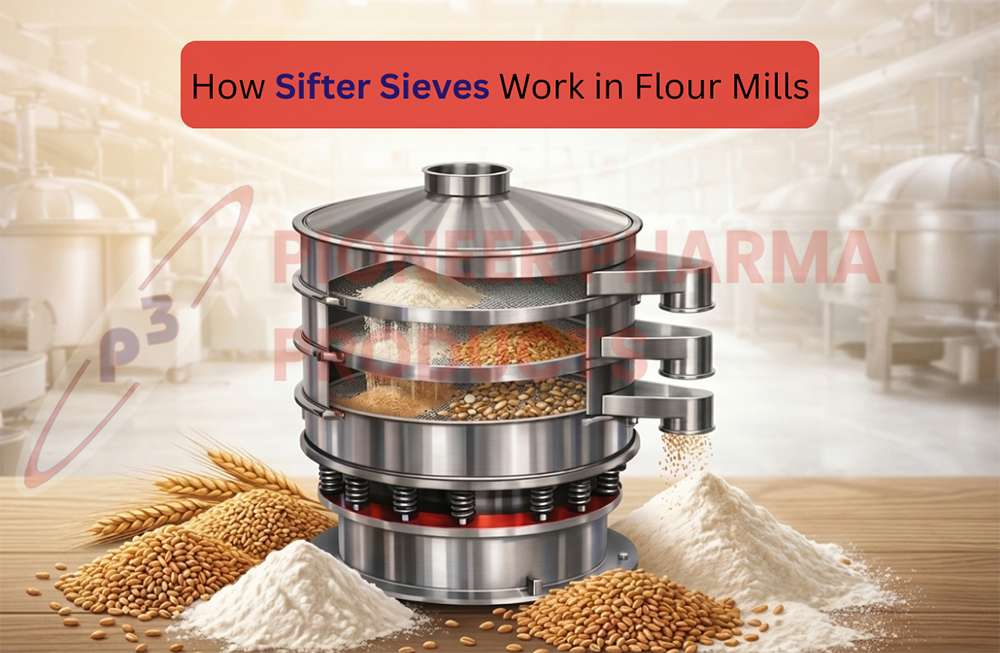
Industrial food-processing facilities can use heavy-duty sieving systems with motorized vibration or rotary screening, multi-layer screening capability, automated feed control, dust containment, multi-deck separation, and sensor-based monitoring. The page also identifies vibro sifters among the industrial sieving equipment used for processing applications.